Personal Finance,
Health & Real Answers.
Last updated: May 2026
Guides written to go alongside our calculators — explaining the numbers, the context, and what they mean for real decisions.
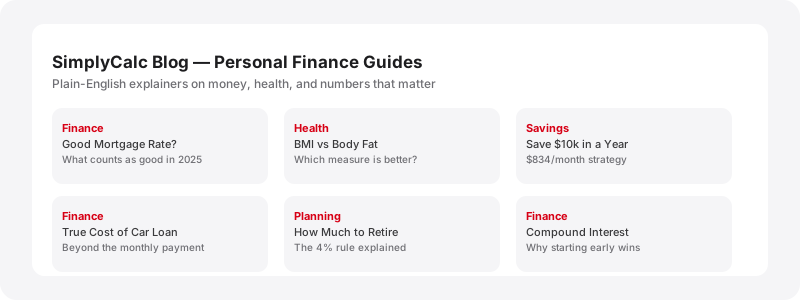
Guides That Do the Maths With You
Each article on SimplyCalc goes further than explaining a concept — it works through the actual numbers so you can see what the answer looks like for real amounts of money. The mortgage guide tells you what a competitive rate is and runs the comparison. The retirement guide calculates the pot size, not just the principle.
All calculators referenced in each article are free, run in your browser, and require no account. The guides cover the UK, US, EU, Norway, Australia and Canada — with specific figures and tax rules for each region where they differ.
Topics covered: mortgage rates, salary and take-home pay, retirement planning, compound interest, BMI and health metrics, ISA vs pension, renting vs buying, car finance, credit scores, emergency funds and more.
What Is a Good Mortgage Rate in 2026?
Mortgage rates shift constantly — but understanding what a "good" rate looks like in 2025 could save you tens of thousands over the life of your loan.
Read Article →
LTV limits, income rules, deposit requirements and what is normal — a country-by-country breakdown across 30+ markets including all EU states, Norway, the UK and the USA.
BMI is ubiquitous but imperfect. Body fat percentage is more accurate but harder to measure. Here is what the science actually says.
Saving $10,000 in a year means putting aside $833/month. Here is a realistic plan that actually works — with the maths to back it up.
The monthly payment is not the cost of a car loan. Here is how to calculate what you will really pay — and how dealers make money from your financing.
Multiply your desired annual income by 25. That is the 4% rule's answer to how much you need to retire. Here is what that means — and where it falls short.
A 25-year-old saving £200/month beats a 35-year-old saving £400/month — even with identical returns. Compound interest is why.